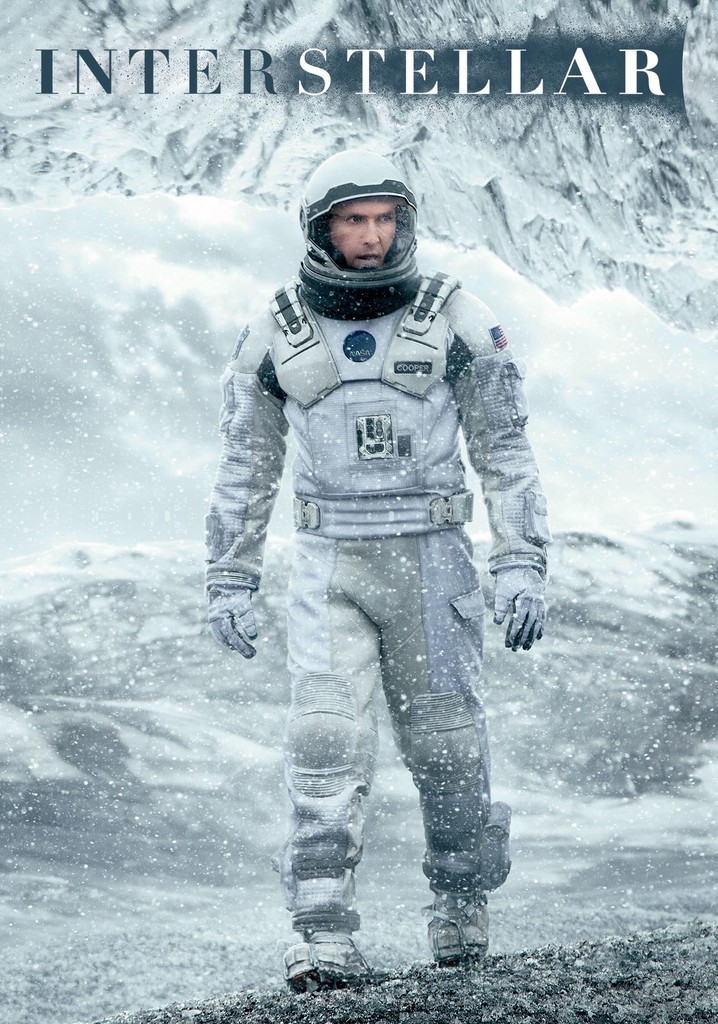


Christopher Nolan's "Interstellar" is more than just a science fiction film; it's a profound exploration of humanity's place in the cosmos, a desperate search for survival against overwhelming odds, and a testament to the enduring power of love and connection. Released in 2014, the film captivated audiences with its stunning visuals, ambitious scientific concepts, and emotionally resonant narrative. It dares to ask big questions about our future and the lengths we'll go to ensure its survival.
Background & Context
"Interstellar" is a 2014 science fiction film directed by Christopher Nolan, who co-wrote the screenplay with his brother Jonathan Nolan (Source: Wikipedia). The film boasts an ensemble cast featuring Matthew McConaughey, Anne Hathaway, Jessica Chastain, Bill Irwin, Ellen Burstyn, and Michael Caine. The story is set in a dystopian future where Earth is plagued by catastrophic blight and famine, threatening the survival of humanity (Source: Wikipedia).
The genesis of "Interstellar" can be traced back to a concept developed by producer Lynda Obst and theoretical physicist Kip Thorne in 2006. Initially, Steven Spielberg was slated to direct, but the project eventually landed with Christopher Nolan. Nolan, known for his complex and thought-provoking films like "Inception" and "The Dark Knight" trilogy, brought his signature style to "Interstellar," blending scientific accuracy with grand cinematic storytelling. He collaborated closely with Thorne to ensure that the film's depiction of wormholes and black holes was as scientifically plausible as possible, within the bounds of cinematic license.
The film's ambition is evident in its scope and scale. Nolan aimed to create a science fiction film that felt both epic and intimate, exploring not only the vastness of space but also the deeply personal connections between its characters. The use of practical effects, combined with groundbreaking visual effects, contributed to the film's immersive and believable portrayal of space travel and otherworldly environments. The film's release was highly anticipated, and it quickly became a critical and commercial success, sparking conversations about its themes and scientific concepts.
The collaboration between Nolan and Thorne was crucial to the film's success. Thorne, a renowned physicist, served as a scientific consultant, ensuring that the film's depiction of gravitational physics and astrophysics was grounded in real science. While Nolan took certain creative liberties for dramatic purposes, he strived to maintain a level of scientific accuracy that distinguished "Interstellar" from other science fiction films. This commitment to realism contributed to the film's sense of wonder and its ability to engage audiences with complex scientific ideas. "Interstellar" is notable for its blend of hard science fiction elements with emotional storytelling, making it a unique and impactful cinematic experience.
Plot & Storylines
In a near-future Earth ravaged by blight, former NASA pilot Joseph Cooper (Matthew McConaughey) struggles to raise his children, Murph and Tom, on a farm. As dust storms become increasingly severe and crops fail, humanity faces imminent extinction. Cooper is haunted by the past and yearns for something more than just survival. A series of strange gravitational anomalies leads Cooper and Murph to a secret NASA installation headed by Professor Brand (Michael Caine), who reveals a desperate plan to save humanity.
Near a wormhole located near Saturn, a wormhole was theorized to have been created by an unknown intelligence. Through this wormhole are potentially habitable planets orbiting a black hole named Gargantua. Years prior, NASA sent several astronauts through the wormhole to assess the planets' suitability for colonization. Cooper is recruited to pilot the spacecraft Endurance, along with a team of researchers including Professor Brand's daughter, Amelia (Anne Hathaway), to investigate the data from these pioneers. The mission is to determine if any of the planets can sustain human life and to establish a colony, giving humanity a second chance.
The journey through the wormhole takes them to a planet orbiting Gargantua, where time is severely dilated due to the black hole's immense gravity. A few minutes on the planet equal several years on Earth. The team encounters massive tidal waves and suffers a devastating loss. As they travel to other planets, they face further challenges and difficult choices, grappling with the ethical implications of their mission and the sacrifices required to ensure humanity's survival. They eventually reach a frozen planet where they retrieve Dr. Mann (Matt Damon) from cryosleep, only to discover that he was sending fake signals of habitability in order to be rescued, and that he plans to return to Earth. A deadly confrontation ensues.
Cooper and Amelia eventually realize that the key to saving humanity lies in understanding the singularity inside Gargantua. Cooper sacrifices himself by detaching from the Endurance and falling into the black hole to gather quantum data, which could help solve the gravity equation and enable humanity to harness gravity for space travel. Inside the black hole, Cooper finds himself in a tesseract, a five-dimensional space constructed by future humans. He is able to communicate with his daughter Murph across time through gravitational waves, transmitting the quantum data he collected. Murph, now an adult (Jessica Chastain), uses this data to solve the gravity equation and develop the technology to build massive space habitats, allowing humanity to escape the dying Earth. In the end, Cooper awakens on a space colony near Saturn and reunites with Murph, now an old woman. She encourages him to return to Amelia, who is on a potentially habitable planet, ready to begin a new colony. The film concludes with Cooper setting off to find Amelia, symbolizing humanity's enduring hope and resilience.
Cast & Production
"Interstellar" features a stellar cast led by Matthew McConaughey as Joseph Cooper, a former NASA pilot turned farmer who embarks on a perilous mission to save humanity. Anne Hathaway plays Amelia Brand, a biologist and astronaut who joins Cooper on the journey through the wormhole. Jessica Chastain portrays the adult Murph, Cooper's daughter, who plays a crucial role in solving the gravity equation. Michael Caine is Professor Brand, the mastermind behind NASA's plan to find a new home for humanity. Other notable cast members include Bill Irwin, Ellen Burstyn, and Matt Damon.
Christopher Nolan directed and co-wrote "Interstellar" with his brother Jonathan Nolan. The film was produced by Emma Thomas, Christopher Nolan, and Lynda Obst. The production design was handled by Nathan Crowley, and the visual effects were supervised by Paul Franklin. The film's score was composed by Hans Zimmer, who created a haunting and evocative soundtrack that perfectly complements the film's themes and visuals. The cinematography was by Hoyte van Hoytema.
The production of "Interstellar" was a massive undertaking, involving extensive location shooting and the creation of groundbreaking visual effects. Nolan aimed to create a realistic and immersive portrayal of space travel, using practical effects whenever possible. The film's depiction of the wormhole and black hole was based on scientific theories and calculations, thanks to the collaboration with physicist Kip Thorne. The use of IMAX cameras and large-format film contributed to the film's stunning visual quality, creating a truly epic cinematic experience. "Interstellar" is a testament to Nolan's vision and his commitment to pushing the boundaries of filmmaking.
Reception & Impact
"Interstellar" received generally positive reviews from critics, who praised its ambition, visual effects, and performances. However, some critics found the plot convoluted and the science questionable. The film was a major box office success, grossing over $677 million worldwide. "Interstellar" was nominated for five Academy Awards, winning for Best Visual Effects. The film's success solidified Christopher Nolan's reputation as one of the leading filmmakers of his generation.
"Interstellar" has had a significant cultural impact, sparking discussions about science, philosophy, and the future of humanity. The film's themes of exploration, survival, and the importance of love and connection have resonated with audiences around the world. The film's depiction of wormholes and black holes has also inspired a new generation of scientists and filmmakers. "Interstellar" continues to be a popular and influential film, and its legacy is likely to endure for years to come. It has also been praised for its realistic depiction of space travel, with scientists and engineers noting its attention to detail and scientific accuracy.
The film's blend of science and emotion has made it a favorite among both science fiction fans and general audiences. Its exploration of complex themes such as the nature of time, the possibility of interstellar travel, and the importance of human connection has set it apart from other science fiction films. "Interstellar" is not just a visually stunning spectacle, but also a thought-provoking and emotionally resonant story that challenges viewers to think about their place in the universe.
FAQ
1. What is the main conflict in Interstellar?
The main conflict in "Interstellar" revolves around humanity's struggle for survival in the face of a dying Earth. Catastrophic blight and famine threaten to wipe out the human race, forcing a group of astronauts to embark on a perilous journey through a wormhole in search of a new home. The conflict is both external, battling the harsh conditions of space and unknown planets, and internal, as the characters grapple with difficult choices and ethical dilemmas.
2. What is the significance of the black hole Gargantua?
Gargantua is a supermassive black hole that plays a crucial role in the film's plot. It is located near the wormhole that the astronauts travel through, and its immense gravity causes significant time dilation on the planets orbiting it. Additionally, the singularity inside Gargantua holds the quantum data that Cooper needs to transmit to Murph, enabling her to solve the gravity equation and save humanity. Gargantua represents both a danger and an opportunity for the characters.
3. How does Cooper communicate with Murph across time?
Cooper communicates with Murph across time through gravitational waves while inside the tesseract, a five-dimensional space constructed by future humans within the black hole. By manipulating the gravitational forces within the tesseract, Cooper is able to influence the movement of the hands on Murph's watch, transmitting the quantum data he collected. This allows Murph to solve the gravity equation and develop the technology to build space habitats.
4. What is the message of Interstellar?
"Interstellar" conveys several powerful messages, including the importance of human exploration and innovation in the face of existential threats. It also emphasizes the enduring power of love and connection, showing how these forces can transcend time and space. The film suggests that humanity's survival depends on its ability to adapt, overcome challenges, and work together towards a common goal. It also touches on the idea that sometimes the greatest discoveries come from within, from our own human intuition and emotion.
5. Is Interstellar scientifically accurate?
While "Interstellar" takes certain creative liberties for dramatic purposes, it is based on scientific theories and calculations, particularly regarding the depiction of wormholes and black holes. Christopher Nolan collaborated with theoretical physicist Kip Thorne to ensure that the film's portrayal of these phenomena was as scientifically plausible as possible. However, some aspects of the film, such as the five-dimensional tesseract, are more speculative and imaginative.
6. What happens to Amelia Brand at the end of the movie?
At the end of "Interstellar," Amelia Brand is shown to have reached the potentially habitable planet that she was heading towards. She is setting up a base camp, preparing for the arrival of the rest of humanity. Cooper, after reuniting with his daughter Murph, is encouraged to go back through the wormhole and find Amelia, implying that she is ready to begin a new colony and continue the mission of saving humanity.
7. What is the significance of Murph's watch?
Murph's watch serves as a crucial plot device in "Interstellar." Cooper gives it to her before leaving on his mission, and it becomes the medium through which he communicates with her across time while inside the tesseract. The watch symbolizes the bond between Cooper and Murph and represents the power of love to transcend physical boundaries. It's also a physical reminder of the promise he made to return.
8. Why does Cooper leave his family?
Cooper makes the agonizing decision to leave his family because he believes it is the only way to save humanity, including his children. The Earth is dying, and he sees the mission through the wormhole as the last hope for finding a new home for mankind. Although it causes him immense pain to leave his family, he knows that if he succeeds, he will be giving them a chance at a future that they would not have otherwise.
Review/discuss on Gatsby


