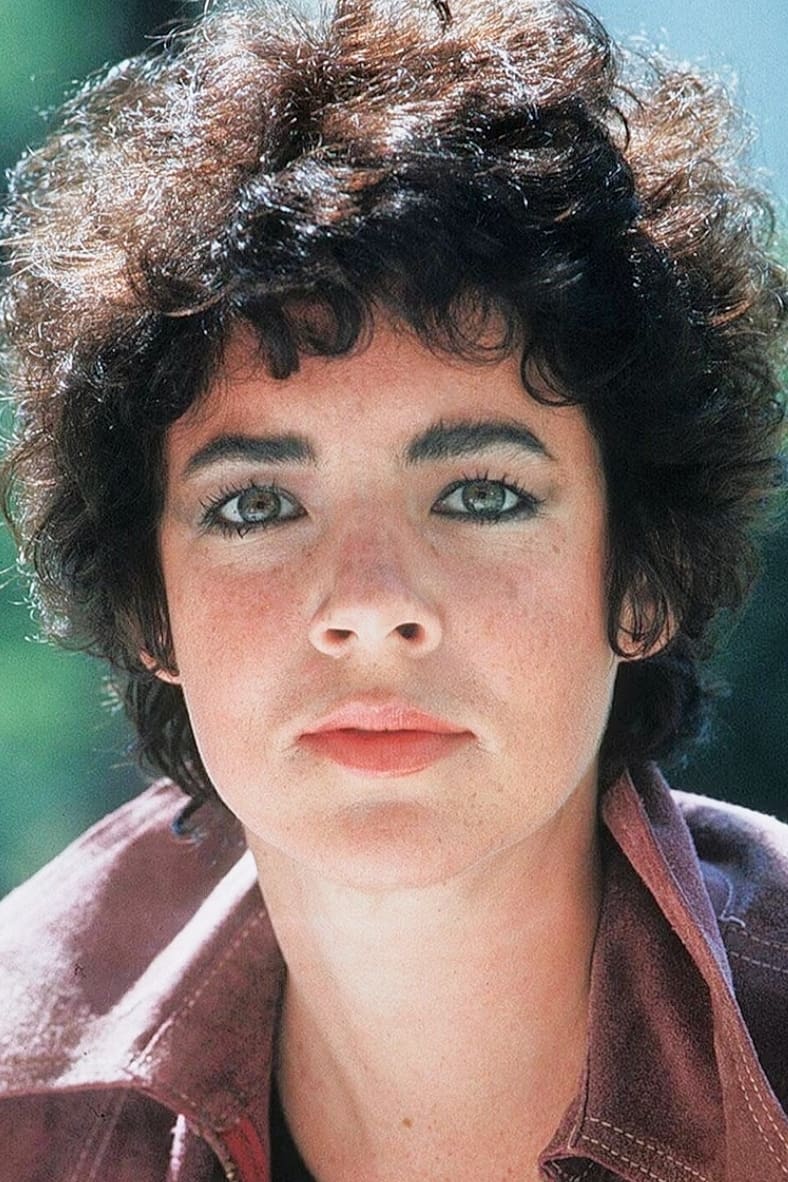

Stockard Channing is an actress who defines the word versatile. While many fans first discovered her as the cynical and sharp-tongued Rizzo in Grease, her career spans much deeper than the halls of Rydell High. Over several decades, she has moved seamlessly between massive Hollywood blockbusters and intimate independent dramas. Her presence on screen is often described as both commanding and vulnerable, a rare combination that makes every character she plays feel entirely real. Whether she is playing a high-society matriarch or a whimsical witch, Channing brings a specific gravity to her roles that anchors the entire film. She has earned critical acclaim, including an Academy Award nomination and multiple Emmy wins, proving that her talent is as durable as it is profound. Exploring Stockard Channing movies and her career is like taking a tour through the best of American cinema history. From the late 1970s to the modern era, she has remained a constant force for quality and authenticity. This guide dives deep into her most significant roles, her artistic evolution, and the reason why she remains a beloved figure in the entertainment industry today. It is time to look past the pink jacket and see the full scope of a truly legendary performer.
The Cultural Phenomenon of Grease and the Birth of Rizzo
In 1978, Stockard Channing took on the role that would change her life and cement her place in pop culture history. Playing Betty Rizzo in the film adaptation of Grease was a bold move for an actress who was already in her thirties at the time. Despite the age gap between her and the character, Channing embodied the rebellious spirit of the 1950s teenager with startling accuracy. Rizzo was the leader of the Pink Ladies, a character defined by her tough exterior and hidden insecurities. Channing brought a layer of sophistication to the role that prevented Rizzo from becoming a mere caricature. Her performance of There Are Worse Things I Could Do remains one of the most poignant moments in musical film history. It showed a girl who was forced to grow up too fast in a world that judged her every move. Rizzo didn't just have a Sandra Dee complex; she had the best wardrobe in the entire movie. Fans across the world connected with her defiance and her refusal to conform to the expectations of her peers. Even decades later, Rizzo is often cited as the most complex and interesting character in the Grease universe. This role proved that Channing could carry a film with her charisma and vocal talent. It also established her as an actress who was not afraid to play characters that were not always likable. The success of Grease was astronomical, and Channing became a household name almost overnight. However, she was careful not to let the success of one musical define her entire future in the industry.
After the massive success of Grease, Channing could have easily stayed in the realm of lighthearted comedies and musicals. Instead, she chose to challenge herself with roles that required more emotional depth and variety. She worked steadily through the late seventies and eighties, appearing in projects like The Fortune and The Cheap Detective. These films allowed her to showcase her comedic timing alongside some of the biggest stars of the era. She proved that she could hold her own against actors like Jack Nicholson and Warren Beatty. Her transition from a teenage icon to a leading lady in Hollywood was handled with grace and strategic choices. Channing understood that longevity in the acting world required more than just popularity; it required a commitment to the craft of acting itself. She often returned to the stage during this period, honing her skills in front of live audiences. This dedication to theater would eventually feed back into her film work, giving her a technical precision that few of her peers could match. She became known as a reliable and professional presence on every set she visited. Directors appreciated her ability to take direction and transform a simple script into something far more meaningful. This period of her career was essential for building the foundation of what was to come in the 1990s. She was essentially preparing the world for the dramatic powerhouse she was about to become. The industry began to see her as more than just Rizzo, which was exactly what she wanted.
The Dramatic Peak of Six Degrees of Separation
The early 1990s marked a significant turning point in the filmography of Stockard Channing. In 1993, she reprised her stage role as Ouisa Kittredge in the film adaptation of Six Degrees of Separation. The story follows a wealthy New York couple who are conned by a charismatic young man claiming to be the son of Sidney Poitier. Channing's performance in this film is nothing short of masterful and earned her an Academy Award nomination for Best Actress. She portrays Ouisa with a mixture of intellectual curiosity and growing existential dread. As the film progresses, Ouisa begins to question the superficiality of her high-society life. Watching Stockard Channing deliver a monologue is like watching a masterclass where you actually want to take notes. She captures the nuances of a woman who is waking up to the reality of her own disconnect from the world. The chemistry between her and a young Will Smith was electric, providing a fascinating look at class and race in America. This film proved that Channing was one of the premier dramatic actresses of her generation. She was able to convey complex internal shifts with just a look or a change in her posture. The critical success of Six Degrees of Separation opened doors to even more prestigious projects. It reminded Hollywood that she was a force to be reckoned with in serious cinema. Her performance remains a benchmark for how to translate a successful stage role to the big screen without losing any of its power. This role solidified her status as an actress of immense depth and intellectual weight.
The success of Six Degrees of Separation led to a string of incredible performances throughout the mid-nineties. Channing seemed to be everywhere, appearing in both big-budget films and acclaimed independent works. One such film was Smoke, released in 1995, where she played Ruby McNutt. In this ensemble piece, she delivered a grounded and gritty performance that stood in stark contrast to her work in Six Degrees of Separation. She showed that she could disappear into characters that were far removed from the glamour of New York penthouses. Her ability to adapt to different styles of filmmaking was becoming her greatest asset as an actress. She also appeared in To Wong Foo, Thanks for Everything! Julie Newmar, showcasing her support for diverse and vibrant storytelling. Channing has always had a knack for choosing projects that have something important to say about the human condition. She doesn't just take roles for the sake of working; she takes them because they offer a unique perspective. This discernment has allowed her to maintain a high level of quality across her entire career. Her work in the nineties was characterized by a fearless approach to character building. She was willing to look older, tired, or flawed if the role demanded it for the sake of the story. This lack of vanity is one of the reasons why audiences trust her performances so completely. She is always serving the narrative rather than her own image. This decade was undoubtedly a golden era for her career, filled with variety and excellence.
Cult Classics and the Magic of the Late Nineties
In 1998, Channing took on a role that would endear her to a whole new generation of moviegoers. In the film Practical Magic, she played Aunt Frances Owens alongside Dianne Wiest, Sandra Bullock, and Nicole Kidman. As one of the eccentric and wise aunts, Channing brought a sense of playful mystery to the screen. The film has since become a cult classic, celebrated for its themes of sisterhood and magical realism. Channing's portrayal of Frances was the perfect blend of maternal warmth and mischievous power. If you don't love Aunt Frances, we probably can't be friends. She and Wiest created a memorable duo that served as the emotional backbone of the Owens family. The film allowed Channing to flex her muscles in the fantasy genre, proving she could handle supernatural elements with the same realism as a kitchen-sink drama. Practical Magic continues to be a favorite during the autumn season, and Channing's performance is a major reason why. It showed her ability to fit into an ensemble cast and elevate every scene she was in. This film also highlighted her fantastic comedic timing, which had only grown sharper with time. Fans were delighted to see her embrace such a colorful and fun character after several years of heavy dramas. The movie remains a testament to her versatility and her ability to pick projects with lasting appeal. It is a film that feels like a warm hug, largely due to the presence of the aunts.
As the nineties drew to a close, Channing continued to find success in roles that highlighted her intelligence and wit. In 2001, she starred in The Business of Strangers, a psychological thriller that pitted her against Julia Stiles. This film was a stark reminder of her ability to hold the screen with intense dialogue and subtle power plays. She played a high-powered executive who finds herself in a dangerous game of cat and mouse during a business trip. The performance was sharp, cold, and utterly riveting to watch. She has the rare ability to make high-society snobbery look like a tragic art form. This film showed that she could carry a movie as a lead actress well into her fifties. It was a role that required a great deal of stamina and a deep understanding of corporate dynamics. Critics praised her for her portrayal of a woman who had sacrificed much for her career. Around this same time, she was also making a massive impact on television with her role as First Lady Abigail Bartlet in The West Wing. While technically a television role, her performance was so cinematic that it influenced how audiences perceived her film work. She brought a presidential dignity to the small screen that felt entirely worthy of the big screen. Her chemistry with Martin Sheen was legendary, and she won two Emmy Awards for her work on the series. This crossover success only added to her prestige as an actress. She was now a recognized authority in both mediums, a feat that few achieve at such a high level. Her film choices continued to reflect her desire for complex and challenging narratives.
Later Career and Supporting Excellence
The 2000s and 2010s saw Stockard Channing taking on more supporting roles that allowed her to steal the show in limited screen time. In films like Anything Else and Must Love Dogs, she provided the necessary comedic or emotional weight to the story. She became the secret weapon of many directors, an actress who could come in for a few scenes and leave a lasting impression. In Must Love Dogs, she played the sister of Diane Lane's character, providing much of the film's heart and humor. She has a way of delivering lines that makes them feel spontaneous and deeply felt. Even in smaller roles, she never phoned it in, treating every character with the same respect as a leading part. Her filmography from this period shows an actress who is comfortable in her own skin and her own talent. She wasn't chasing the spotlight; she was simply doing the work that she loved. This era also saw her exploring more international projects and collaborations with various directors. She remained a fixture in the New York acting scene, often moving between film sets and Broadway stages. Her commitment to the arts was recognized with various lifetime achievement honors and awards. Channing's legacy is not just in the roles she played, but in the standard of excellence she set for those around her. She has inspired countless younger actresses with her professionalism and her range. To watch her work is to see an artist who has truly mastered her craft. She continues to work today, recently returning to the world of Practical Magic for an upcoming sequel.
When looking at the full scope of Stockard Channing movies, one thing becomes clear: she is an actress of rare intelligence. She approaches every character with a sense of curiosity and a desire to find the truth of their experience. Whether she is Rizzo, Ouisa, or Aunt Frances, she finds the humanity in the person she is portraying. This is why her characters remain so memorable even decades after the films were released. She does not rely on tricks or mannerisms; she relies on her deep understanding of human psychology. Her career is a testament to the power of persistence and the importance of being true to oneself. She never allowed herself to be pigeonholed into one type of role, constantly pushing the boundaries of what she could do. From the high-energy musicals of the seventies to the quiet dramas of the present day, she has done it all. Her filmography is a rich tapestry of stories that reflect the changing landscape of American cinema. Channing is a reminder that talent and hard work are the keys to a long and successful career in Hollywood. She remains one of the most respected figures in the industry, a title she has earned through decades of stellar work. As we look forward to her future projects, we can be certain that she will continue to surprise and delight us. She is truly a one of a kind talent whose impact on the world of film will be felt for generations to come. Her journey from a breakout star to a living legend is a story of artistic integrity and boundless talent.
Frequently Asked Questions About Stockard Channing Movies
What is Stockard Channing's most famous movie?
Without a doubt, Stockard Channing's most famous movie is the 1978 musical Grease. In this film, she played the iconic character of Betty Rizzo. Her performance made her a household name and the character remains one of the most beloved in musical history. While she has had many other successful roles, Rizzo is the one that most people immediately associate with her name. The film continues to be popular with new generations of fans every year.
Did Stockard Channing win an Oscar for Six Degrees of Separation?
Stockard Channing did not win the Academy Award for her role in Six Degrees of Separation, but she was nominated for Best Actress. Her nomination was a significant recognition of her incredible performance as Ouisa Kittredge. The role was a transition for her from stage to film, and she received universal critical acclaim for her work. While she did not take home the statue, the nomination solidified her position as a top tier dramatic actress in Hollywood.
Who did Stockard Channing play in Practical Magic?
In the 1998 cult classic Practical Magic, Stockard Channing played Aunt Frances Owens. She starred alongside Dianne Wiest as one of the two eccentric aunts who raise the film's protagonists, played by Sandra Bullock and Nicole Kidman. Her character is known for her wisdom, her magical abilities, and her distinct sense of style. The role is a fan favorite and showcased Channing's ability to play whimsical and maternal characters with ease.
How many movies has Stockard Channing been in?
Stockard Channing has appeared in over 45 feature films throughout her career which spans more than forty years. In addition to her film work, she has an extensive background in television and theater. Her filmography includes a wide variety of genres, from musicals and comedies to intense psychological dramas. This large volume of work reflects her work ethic and her enduring popularity within the entertainment industry.
Is Stockard Channing returning for Practical Magic 2?
Yes, it has been confirmed that Stockard Channing will reprise her role as Aunt Frances in the upcoming sequel Practical Magic 2. She will be joining other original cast members, including Sandra Bullock, Nicole Kidman, and Dianne Wiest. Fans are incredibly excited to see the original aunts return to the screen. The sequel is expected to continue the story of the Owens family and their magical legacy, and Channing's return is a highly anticipated part of the project.
Stockard Channing is an actress who actually deserves the title of legend. However, the most controversial take on her career is that her role in Grease, while iconic, actually hindered her from being recognized as a serious dramatic actress for far too long. Hollywood spent a decade trying to find another Rizzo when they should have been looking for the next great dramatic lead. It took Six Degrees of Separation to finally wake the industry up to the fact that she was a powerhouse of the highest order. We almost missed out on some of the best dramatic performances of the nineties because of a pink jacket. Thankfully, her talent was too big to be contained by a single stereotype. If you want to see more of her incredible range, you should check out her filmography and see for yourself. Rate and review on Gatsby.