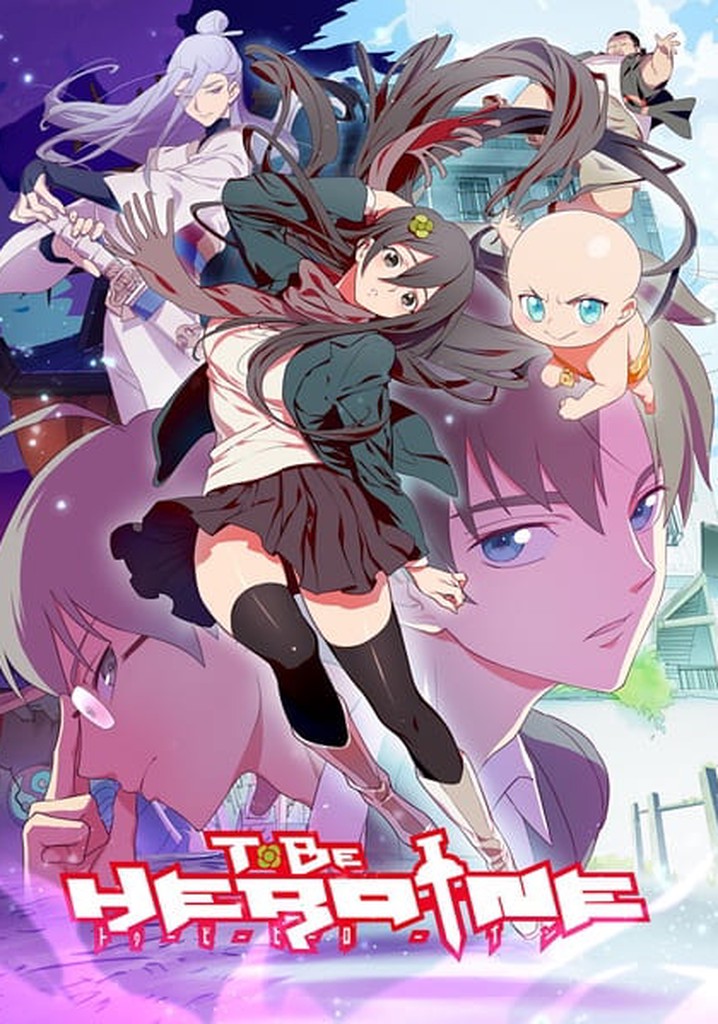

To Be Heroine is one of those rare animated gems that manages to be completely absurd while simultaneously punching you in the gut with emotional resonance. As the second installment in the franchise following the wacky adventures of its predecessor, this series takes a sharp turn from the slapstick comedy of a middle-aged man becoming a superhero into something far more introspective and visually arresting. It follows Futaba, a high school girl caught between the innocence of childhood and the daunting weight of adult responsibilities, who finds herself transported to a world where clothing manifests as powerful spirits. While the premise sounds like something dreamed up during a fever dream, the execution is a masterclass in metaphor and coming-of-age storytelling. Fans of the original might come for the humor, but they stay for the surprisingly dark and philosophical questions about identity and the passage of time. It is a show that demands your full attention, rewarding viewers with a narrative that is as complex as the outfits its characters wear. Whether you are an anime veteran or a casual viewer looking for something different, this series offers a refreshing break from the tropes of the genre. Adulthood is basically just one long boss battle without the cool transformations, but Futaba makes us wish we had a few spirits in our closet to help us out.
The Surreal Premise of To Be Heroine
The story of To Be Heroine begins with Futaba, a girl who has spent her life being told what to do and how to behave. She is the daughter of the protagonist from the first season, though the connection is not immediately apparent to those who haven't seen the prequel. One day, she is pulled into a dimension where the rules of reality are dictated by clothing. In this dark, shadow-filled world, the "Leaf" people possess the ability to summon spirits based on the clothes they are wearing. This is not just a gimmick for cool action scenes; it serves as a profound metaphor for how we present ourselves to the world and the "armor" we wear to protect our inner selves. The world-building is intentionally disorienting, reflecting Futaba's internal state of confusion as she nears the end of her high school years.
In this strange land, the quality and type of clothing determine the power of the summoned spirit. This leads to some of the most creative character designs seen in modern donghua and anime. We see spirits that look like elaborate mechs, mythical creatures, and even humanoid warriors, all born from fabric and style. The contrast between the mundane reality of Futaba's school life and the high-stakes battles in the cloth world creates a compelling narrative friction. We've all been that awkward teenager wishing for a magic portal, but Futaba's portal comes with a heavy price tag of self-discovery and sacrifice.
As Futaba navigates this world, she is accompanied by Isaku, a mysterious boy who seems to know more about the situation than he lets on. Their relationship forms the emotional core of the series. Unlike the first season, which focused on the outward absurdity of a superhero's life, this season looks inward. It explores the fear of moving forward and the desire to stay in a world where things make sense. The battles are spectacular, but they are always secondary to Futaba's psychological journey. The show uses its surreal setting to ask if we are the masters of our identity or if we are simply wearing the expectations of others like a heavy cloak.
Character Analysis: Futaba and the Weight of Expectation
Futaba is a protagonist who feels incredibly real despite the fantastical circumstances around her. She is not the typical "chosen one" who embraces her destiny with open arms. Instead, she is hesitant, fearful, and often overwhelmed by the choices she has to make. This makes her journey towards becoming a "heroine" much more satisfying than a standard hero's journey. She represents the struggle of every teenager who feels the pressure to succeed and the dread of an uncertain future. Choosing an outfit shouldn't be a life-or-death situation, but for Futaba, every choice she makes in the cloth world has a direct impact on her soul and her reality.
Isaku, or Hikari in the Japanese version, serves as a foil to Futaba's indecision. He is a character defined by his loyalty and his role as a protector, but he also has his own hidden depths. The chemistry between him and Futaba is grounded in a shared sense of displacement. They are both outsiders in a world that is trying to define them. As the series progresses, we see Isaku's true nature revealed, which ties back into the themes of memory and legacy. He isn't just a sidekick; he is a mirror reflecting Futaba's growth and her ability to trust others after years of feeling isolated.
Then there is Simon, a character who adds another layer of complexity to the cast. Simon represents the more antagonistic forces of the cloth world, but like everything in To Be Heroine, his motivations are not black and white. He represents the danger of being consumed by one's own desires and the consequences of refusing to change. Through Simon, the show explores the darker side of "wearing a mask" or a specific persona. The characters are never just tropes; they are explorations of the human psyche, making the cast one of the strongest elements of the entire series.
Production Quality and Visual Innovation
Produced by Haoliners Animation League and Studio LAN, To Be Heroine boasts a visual style that is distinct and often experimental. The series uses a blend of traditional 2D animation with 3D elements that sometimes border on the uncanny, which fits the surreal tone perfectly. The color palette is particularly striking, often using deep purples and blues to depict the shadow world, contrasted with the vibrant, almost neon colors of the clothing spirits. This visual dichotomy reinforces the theme of light versus dark and childhood versus adulthood. It is clear that the creators wanted to push the boundaries of what a Chinese-Japanese co-production could look like.
The direction by Li Haoling is confident and artistic. He uses camera angles and lighting to convey emotion in ways that dialogue cannot. There are sequences in the series that feel like a fever dream, with fluid animation that captures the chaotic nature of the battles. The character designs are also a highlight, with each clothing spirit having a unique aesthetic that tells a story about its wearer. It is a show that you can watch multiple times and still find new details in the background or in the intricate designs of the costumes. The music also deserves praise, as it shifts from melancholic melodies to high-energy tracks that heighten the tension of the action scenes.
The production quality also reflects the growing influence of donghua in the global market. While it has the sensibilities of a Japanese anime, there is a distinct cultural flavor to the storytelling and humor. This blend creates a unique viewing experience that feels fresh and unpredictable. It doesn't follow the standard pacing of a seasonal anime, often taking risks with its narrative structure. This can be jarring for some viewers, but for those who appreciate avant-garde storytelling, it is a breath of fresh air. The series proves that animation can be a medium for serious artistic expression while still being entertaining and accessible.
Thematic Depth: The Heroine's Journey
At its heart, To Be Heroine is an exploration of the "Heroine's Journey," which differs from the traditional masculine "Hero's Journey" described by Joseph Campbell. While the hero's journey is often about conquest and external victory, the heroine's journey is more about internal integration and reclaiming the parts of the self that have been lost or suppressed. Futaba's time in the cloth world is a symbolic descent into her own subconscious. She has to confront the shadows of her past and the fears of her future to find her true voice. This is a story about healing the disconnect between who we are and who we are expected to be.
The show also tackles the theme of parental legacy. Futaba's father was the "hero" of the first season, but his heroism was messy, absurd, and ultimately left a complicated impact on his daughter. Futaba has to find a way to be a hero on her own terms, without being overshadowed by her father's legend. This subverts the usual sequel tropes where the child simply follows in the parent's footsteps. Instead, Futaba has to dismantle the idea of heroism she was raised with and build something new and authentic. It is a powerful message for anyone who has ever felt the weight of their family's expectations.
The concept of "clothing" as identity is perhaps the most profound theme in the series. In our daily lives, we use clothes to signal our status, our gender, our interests, and our moods. In To Be Heroine, this is taken to its logical extreme. The spirits show the world the raw power of these signals. But the show also warns that if we rely too much on these external markers, we lose sight of the person underneath. Futaba's ultimate victory is not just winning a battle, but learning to exist without the armor, accepting her vulnerability as a strength rather than a weakness.
Connection to Season 1 and the Future of the Franchise
While To Be Heroine can be enjoyed on its own, it is deeply connected to the first season of To Be Hero. The tonal shift between the two is intentional, representing the difference between the chaotic energy of a father and the more internal, emotional world of a daughter. The ending of the first season set the stage for the psychological exploration of the second. Seeing how the events of the past have shaped Futaba's world adds a layer of poignancy to her struggles. It is a rare example of a sequel that expands the world while completely changing the genre and tone, yet still feeling like a cohesive part of the franchise.
The franchise is set to continue with the upcoming To Be Hero X, which looks to bring even more high-octane action and conceptual depth to the series. The success of the first two seasons has built a dedicated cult following that appreciates the show's willingness to be weird. To Be Heroine remains the emotional anchor of the trilogy, providing the character growth and thematic weight that makes the spectacle of the battles meaningful. It is the bridge between the simple comedy of the beginning and the epic scale of the future. The series reminds us that no matter how many spirits we summon, the biggest battles are always fought within ourselves.
Looking back at the series, it is clear that the creators were not interested in playing it safe. They took a concept that could have been a simple "magical girl" clone and turned it into a dark, surreal, and deeply moving drama. The characters stay with you long after the final credits roll, and the imagery of the cloth world is hard to forget. It is a testament to the power of original storytelling in animation. If you haven't seen it yet, prepare for a journey that will make you rethink everything from your relationship with your parents to the shirt you are currently wearing.
FAQ: Everything You Need to Know About To Be Heroine
Is To Be Heroine a direct sequel to To Be Hero?
Yes, To Be Heroine is the second season of the To Be Hero franchise. While it features a new protagonist, Futaba, she is the daughter of the main character from the first season. The story takes place in the same universe but shifts from a comedy-focused superhero parody to a more serious coming-of-age drama with surreal elements.
Do I need to watch Season 1 before watching To Be Heroine?
While you can follow the main plot of To Be Heroine without having seen the first season, it is highly recommended to watch Season 1 first. Understanding the backstory of Futaba's father and the nature of the "Hero" world adds significant emotional weight and context to the events of Season 2. It also helps clarify the ending and certain character motivations.
What is the "World of Clothes" in the series?
The World of Clothes is a parallel dimension where the inhabitants, known as Leaf, can summon spirits based on the clothing they wear. This world is shrouded in darkness and shadows, and the power of a spirit is tied to the wearer's identity and the quality of their attire. It serves as a metaphorical space for the characters to work through their psychological issues.
Who are the main characters in To Be Heroine?
The main protagonist is Futaba, a high school girl struggling with the transition to adulthood. She is joined by Isaku (Hikari), a mysterious boy who guides her through the cloth world. Other important characters include Simon, a powerful figure in the parallel dimension, and various clothing spirits that represent different facets of the characters' personalities.
What makes To Be Heroine different from other anime?
To Be Heroine stands out due to its unique blend of Japanese and Chinese animation styles, its surreal and metaphorical plot, and its significant tonal shift from its predecessor. It avoids many common anime tropes in favor of a more experimental and psychological narrative. The focus on the "Heroine's Journey" and the symbolic use of clothing make it a truly one-of-a-kind experience.
In conclusion, To Be Heroine is a fascinating, if sometimes baffling, exploration of growing up in a world that feels increasingly strange. It is a show that isn't afraid to be ugly, confusing, or heartbreaking, which is exactly why it works so well. My slightly controversial take? The second season is actually superior to the first because it dares to have a soul instead of just relying on toilet humor and gags. Rate and review on Gatsby.